

The marketing site uses Browserbot for the broader
live-product experience. In the Dubot app, SDK, and technical docs, its guided on-page runtime is
configured under Guidance. Governed API operations are documented separately as
Actions.
What the customer sees
An active run keeps its job and Stop control visible while it works on the page. The action card stays anchored to the target so the customer can see what is happening.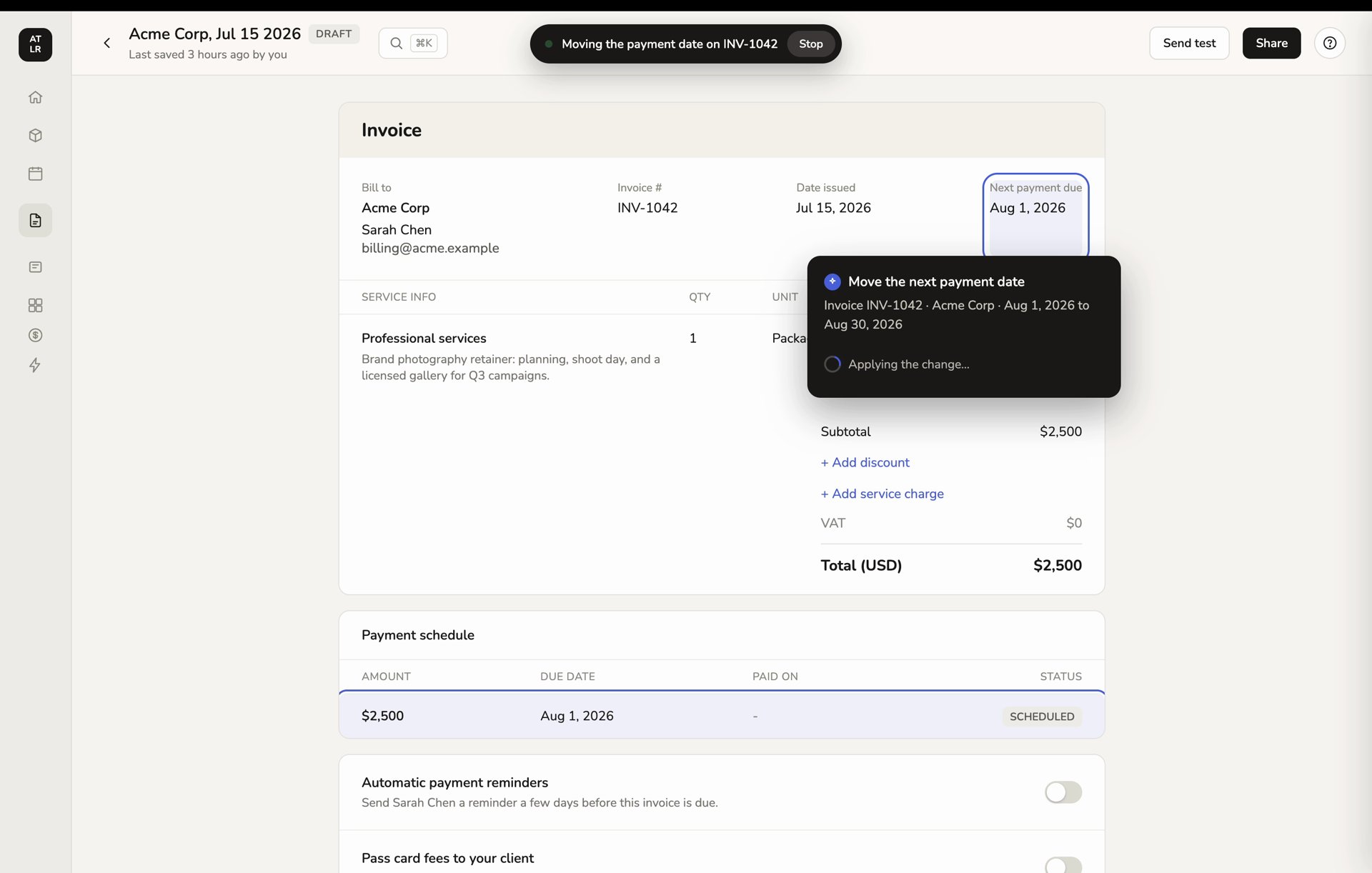
The active job and Stop control remain visible while Guidance applies the change.
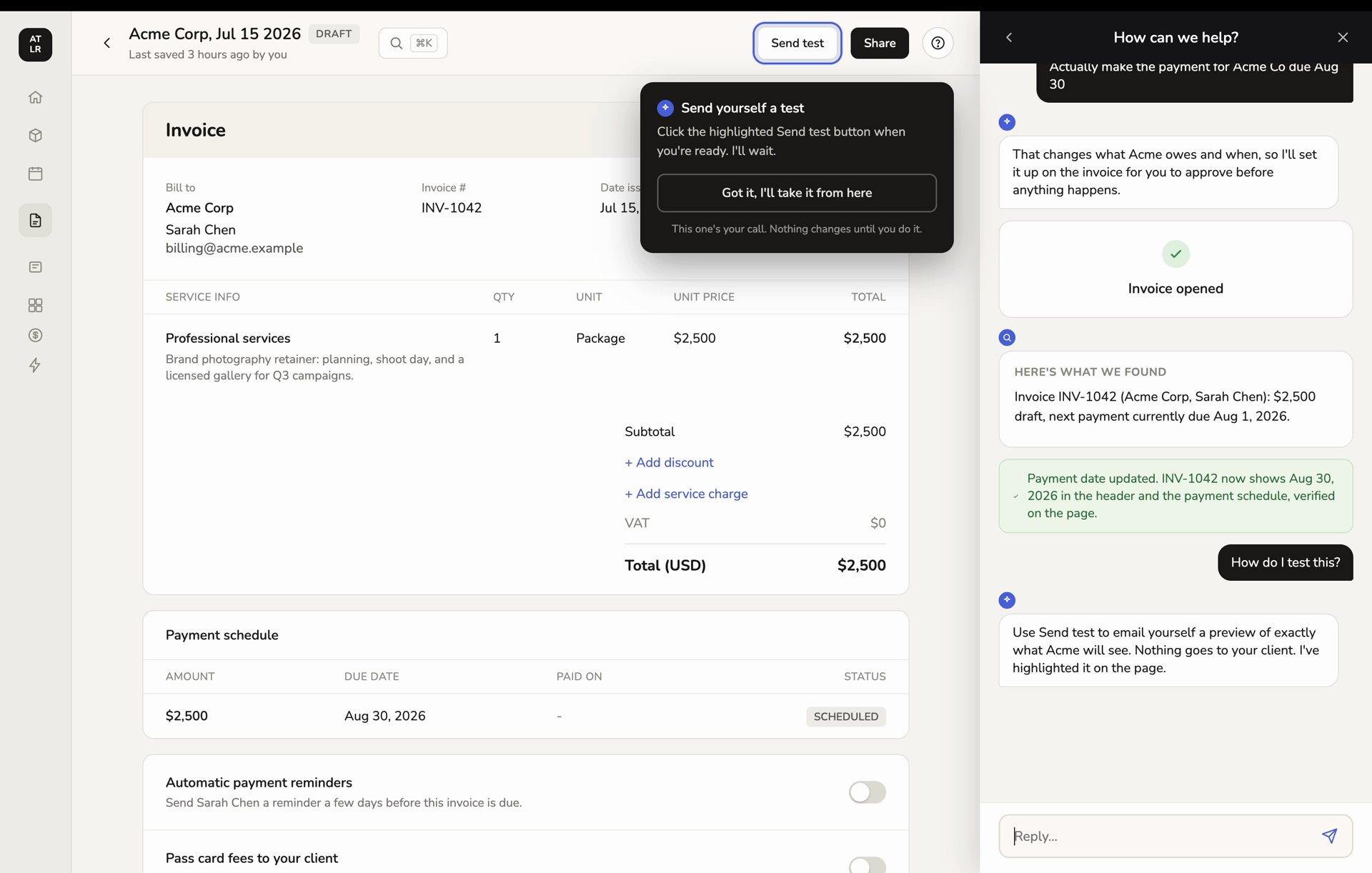
Guidance can highlight a target and wait when the next action belongs to the customer.
The HoneyBook workspace shown in these examples is a demo account. The exact host-product
styling can vary, but the visible run, target, and stop controls are the important behavior.
Two ways to start
Reviewed guides are the more predictable customer-facing path. Goal-based Guidance should be
evaluated with clear constraints and a safe stopping condition before broader use.
Reviewed guide steps
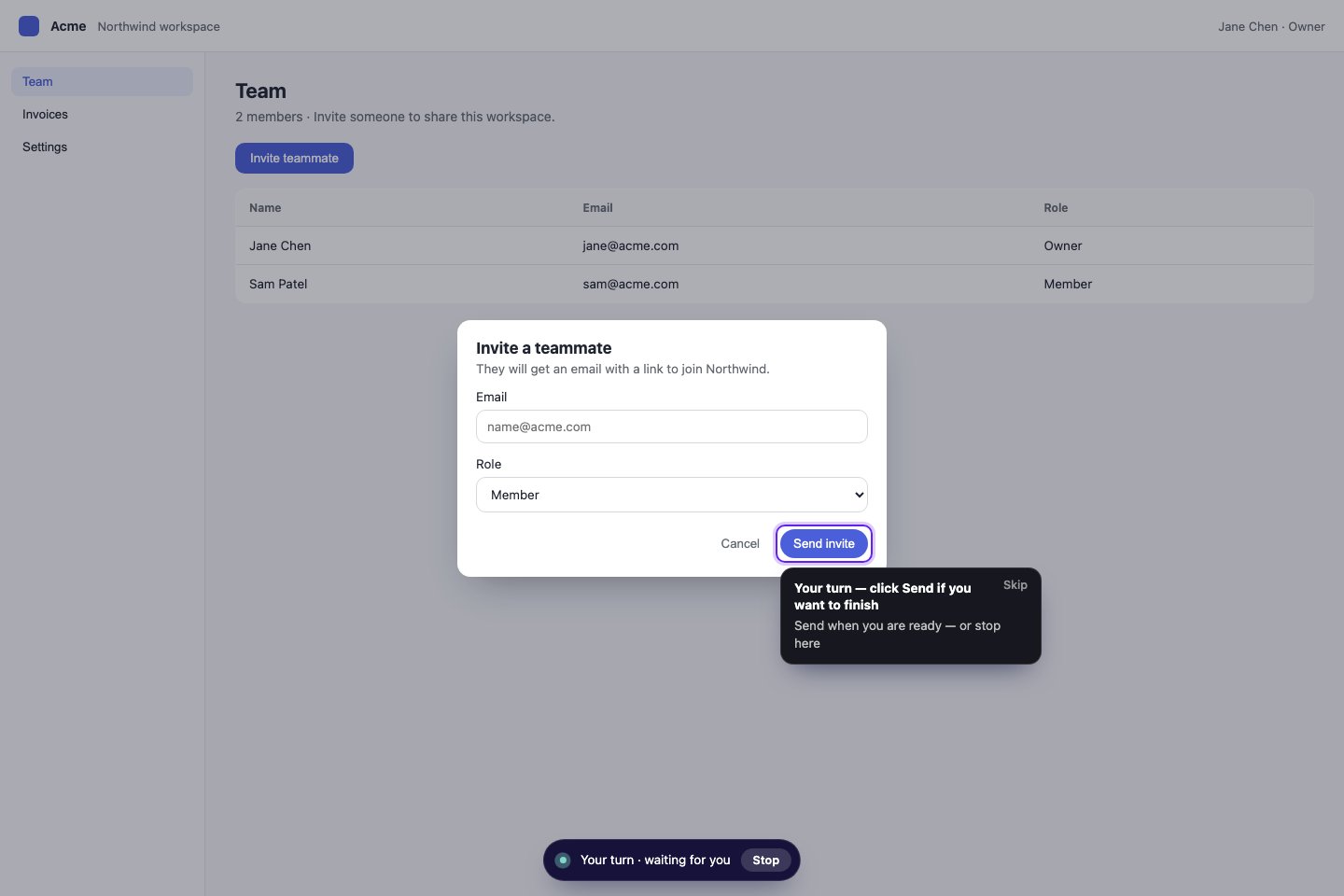
An Indicate step keeps the target, instruction, Skip option, and Stop control visible.
Runtime controls
- A persistent control lets the customer stop a run.
- Indicate steps include a visible target, instruction, and Skip option.
- Guidance can pause for customer input rather than guessing.
- A run that crosses a hard navigation can resume after the SDK initializes on the next page.
- Reduced-motion and screen-reader behavior are part of the SDK surface.
- Completion, stop, error, and abandoned outcomes are recorded for activity review.
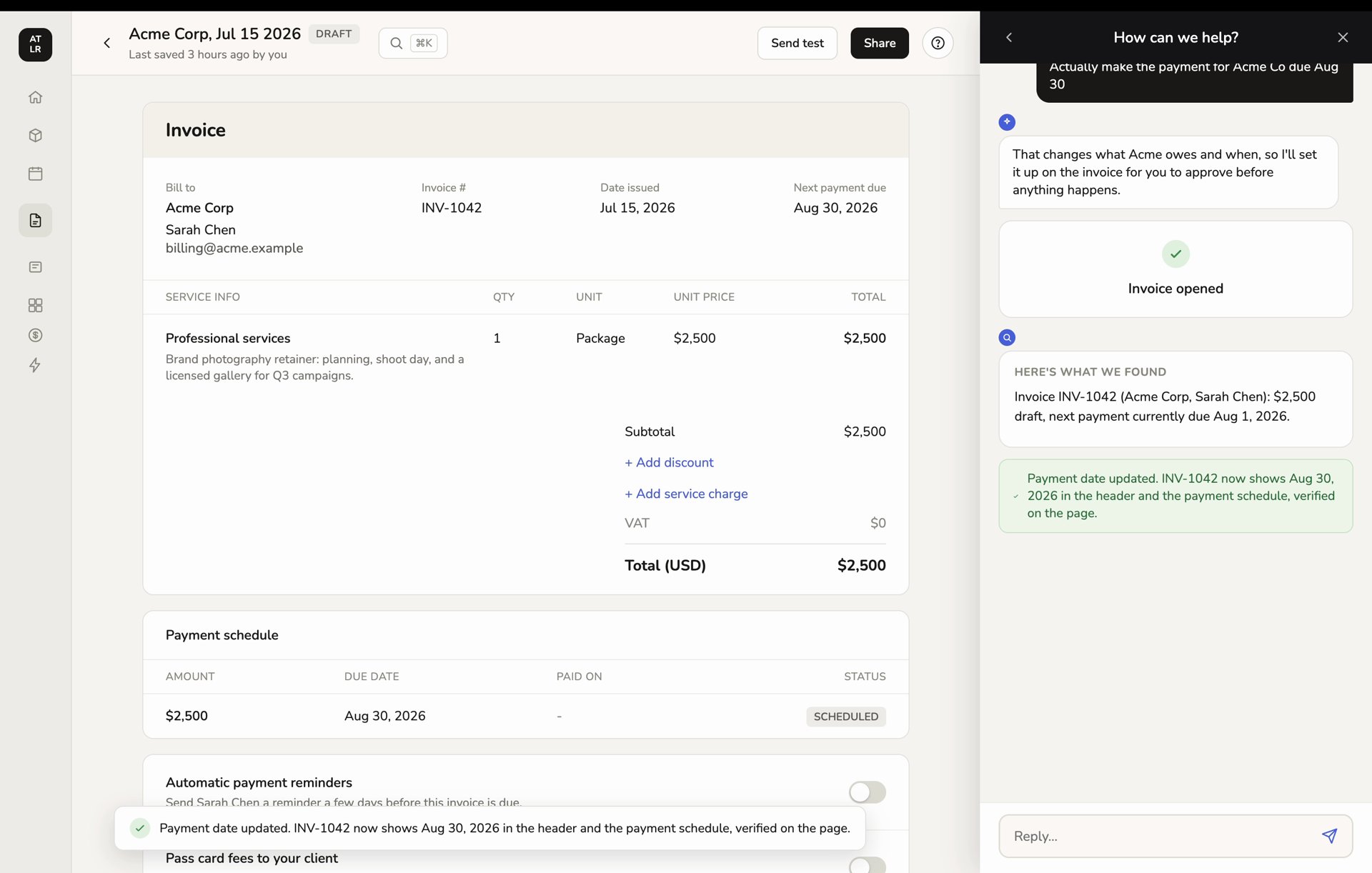
The completed state shows the updated page value and Dubot's verified result.
Configure and publish
The Guidance area contains the reserved Guidance configuration, reviewed guides, and Activity. Production can run only published Guidance configuration and published guides. A Resource Center guide card should not be treated as ready until its guide can be published and its Guidance dependency works in the target environment. A draft guide containing Indicate steps can be tested, but it cannot currently become a Production Resource Center destination. Follow Enable Guidance to configure the workspace, test a representative walkthrough, and turn Guidance on. Then follow Turn a Guidance run into a guide to review a real journey and publish it as reusable help. Developers can start Guidance throughDubot.triggerGuidance(). See
SDK surfaces for the supported call shapes.